
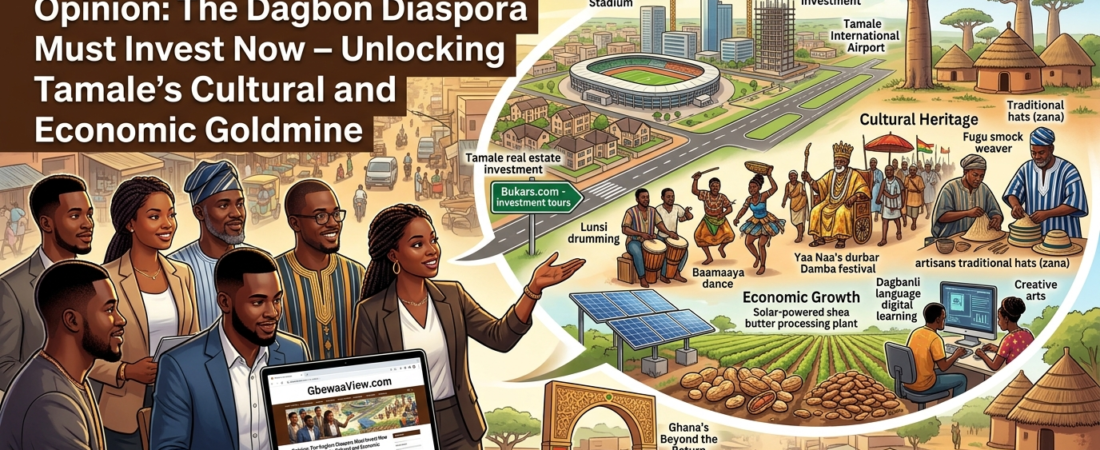
Dagbon’s future depends on diaspora engagement. This editorial explores why investing in Tamale real estate, cultural tourism, and Northern Ghana businesses is the smartest move for the Dagban community worldwide. Includes actionable links to Bukars and Tamale Ghana.
By an Editorial Contributor for GbewaaView.com
Let’s state the uncomfortable truth: the Dagbon kingdom stands at a crossroads. On one side lies a rich tapestry of Dagbani traditions, a resilient chieftaincy system, and a youth population hungry for progress. On the other side, decades of underinvestment and the pull of opportunities in Accra, Kumasi, and abroad have left many of our villages and even Tamale, Northern Region gasping for homegrown economic muscle. As a member of the Dagban diaspora myself, I’m convinced the remedy is not a government handout but a deliberate, collective decision by Dagombas everywhere—especially those abroad—to invest in Dagbon now.
This is not just nostalgia. It’s a pragmatic bet on one of West Africa’s most underserved economic frontiers. And it’s time we treat Tamale business opportunities and Dagbon cultural tourism as the blue-chip assets they truly are.
The Untapped Opportunity: More Than Shea Butter and Smocks
When outsiders hear “Northern Ghana,” images of shea butter processing and handwoven fugu smocks often come to mind. But the real opportunity runs much deeper. Tamale is the fastest-growing city in the Northern sector, with a booming youth demographic, improving road infrastructure, and an international airport. A modern Tamale real estate investment in short-let apartments targeting NGO workers and visiting researchers can yield returns exceeding those in saturated Accra. I’ve seen colleagues pay premium prices for a room in East Legon, ignoring that a furnished apartment near the Tamale Sports Stadium can be built for a fraction and rented out within weeks.
Similarly, cultural heritage tourism around the Damba festival, Bugum fire festival, and the Yaa Naa’s durbar is a sleeping giant. The Dagbon chieftaincy alone is a story powerful enough to fill documentaries, books, and curated travel experiences. Yet we lack sufficient homegrown tour operators, boutique hotels, and transport services. That gap is your invitation.
Why the Diaspora Must Lead the Charge
The Dagban diaspora controls billions of dollars in remittance flows each year. Unfortunately, a large portion goes into consumption—funerals, weddings, and day-to-day upkeep—rather than productive investment. I’m not dismissing social obligations; I’m calling for a parallel “development wallet.” Imagine if just 5% of annual remittances were pooled into a Dagbon diaspora investment fund, targeting:
- Eco-lodges near the Mole National Park and sacred royal sites
- Dagbanli language digital learning platforms for children abroad
- Processing plants for shea, groundnuts, and dawadawa
- Creative hubs for Lunsi drumming, Baamaaya dance, and contemporary Dagban music arts
These are not charitable projects; they are scalable businesses. And they align perfectly with Ghana’s Beyond the Return initiative, which has opened doors for diaspora returnees.
Actionable Steps to Start Investing in Tamale and Dagbon
If you’re reading this from London, New York, or Hamburg and feel the pull to buy land in Tamale or launch a business, here’s a practical roadmap:
- Consult local experts. Before buying property, understand the dual land system (state and stool lands). Reputable real estate agents listed on TamaleGhana.com can guide you through due diligence.
- Test the market with cultural tourism. Partner with an established operator like Bukars.com to organize a Dagbon royal heritage tour for a small group. You’ll learn the terrain, build trust, and gauge demand without heavy upfront capital.
- Offer a diaspora skill transfer. Are you a tech professional? Create a coding bootcamp in Tamale. A nurse? Set up a mobile health screening service that blends modern medicine with respect for Dagban traditional healing.
- Buy authentic crafts directly. If you’re not ready to move, start by sourcing handwoven smocks and traditional hats (zana) from local weavers and selling them online. This supports artisans and builds your brand within the cultural fashion niche.
A Word on Risk and Resilience
I hear the sceptics: “Chieftaincy disputes and political instability make the North risky.” I’d counter that the Dagbon peace process has transformed Yendi and the surrounding districts. Under Yaa Naa Abukari Mahama II, the kingdom is enjoying its most stable period in decades. Security is improving, and the business community is responding. Several hotels and restaurants have opened in Tamale within the last two years, and the city’s night economy is slowly waking up. The early movers will reap the rewards.
Moreover, investing at home is a form of conflict prevention. Idle, unemployed youth are vulnerable to recruitment into chieftaincy-related violence. Every small business we launch in Savelugu, Yendi, or Kumbungu is a brick in the wall of peace.
The Bottom Line: Build While We Remember
Our ancestors built an empire from scratch—a sophisticated Dagbon kingdom that coordinated trade across the Sahel and nurtured a Dagbani literary tradition of riddles, folklore, and drum poetry. Today, we have more resources and far more connectivity. The question is not whether Dagbon will develop, but whether we, the descendants of Na Gbewaa, will be the ones to write that new chapter.
I invite you to share your thoughts on this opinion piece. Are you a diaspora member who has invested back home? What worked, and what didn’t? Drop a comment below. And if you’re ready to take the first step, visit Bukars.com for tailored investment tours and TamaleGhana.com for current business listings and local news.
Next on GbewaaView.com: Diving into Dagbon’s Cultural Heritage—naming ceremonies and the significance of our iconic hats.